
Noticed a black tooth or dark spot on one of your teeth? Tooth discolouration can happen for several reasons, ranging from surface staining to tooth decay or damage inside the tooth.
While some dark marks may be caused by staining, a tooth that is turning black should always be checked by a dentist. The right treatment will depend on what is causing the discolouration.
What causes black teeth?
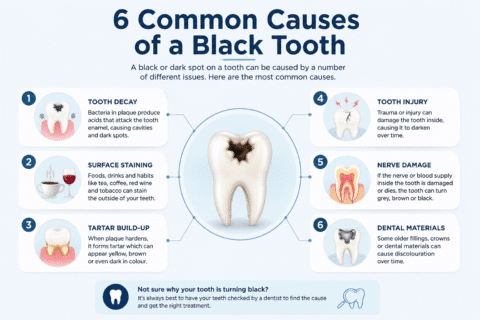
A black tooth can be caused by a problem affecting the outside of the tooth or by changes happening inside it. Some of the most common causes include:
Tooth decay
Tooth decay is one of the most common causes of black spots or dark areas on teeth. Decay occurs when bacteria in plaque produce acids that damage the tooth surface.
In its early stages, tooth decay may cause no symptoms. As it progresses, you may notice a brown or black spot, a visible hole in the tooth, sensitivity or toothache.
If left untreated, decay can spread deeper into the tooth and may eventually affect the nerve inside.
Surface staining
Some foods, drinks and habits can gradually stain the outside of your teeth. Tea, coffee, red wine and tobacco can all contribute to darker discolouration over time.
Plaque and tartar can also attract staining, particularly around the gum line. However, it is important not to assume that every dark mark is simply a stain. A dentist can examine the tooth and determine the cause.
Tartar build-up
When plaque is not removed effectively, it can harden into tartar. Tartar can appear yellow, brown or darker in colour, particularly when it becomes stained.
Professional cleaning may be needed to remove tartar, as it cannot usually be removed through brushing alone.
Injury or trauma to the tooth
A tooth can sometimes become dark after being knocked, damaged or injured. This may happen immediately or even some time after the original injury.
Trauma can affect the blood and nerve supply inside the tooth, causing it to change colour. An injured tooth may appear grey, brown or black and should be assessed by a dentist. In some cases, root canal treatment may be required.
Damage to the nerve inside the tooth
If the nerve and blood supply inside a tooth become damaged or stop functioning, the tooth may gradually darken from the inside.
This can happen following trauma or as a result of deep tooth decay. Because the cause is inside the tooth, surface cleaning or ordinary whitening may not be enough to treat the problem.
Certain medications or dental materials
Some medications and dental materials can contribute to tooth discolouration. Certain older restorations may also affect the appearance of a tooth.
The cause of the discolouration should be identified before deciding on treatment, particularly if only one tooth has changed colour.
Why is only one tooth turning black?
If one tooth is becoming noticeably darker than the surrounding teeth, it is particularly important to have it checked.
A single black or dark tooth may be caused by:
- Tooth decay
- Previous damage or trauma
- Damage to the nerve inside the tooth
- A problem beneath an existing filling or restoration
- Internal tooth discolouration
Your dentist can examine the tooth and may recommend X-rays or other assessments to identify the underlying cause.
Can black teeth be treated?
Yes, in many cases a black or discoloured tooth can be treated. However, the right treatment depends entirely on what is causing the colour change.
Possible treatments may include:
Professional cleaning
If the dark appearance is caused by surface staining or tartar, professional cleaning may help restore the natural appearance of the teeth.
A filling
If tooth decay has caused a cavity or dark area, the decayed portion of the tooth may need to be removed and restored with a filling.
Root canal treatment
If decay or damage has reached the soft tissue inside the tooth, root canal treatment may be needed to remove damaged or infected tissue and help preserve the tooth.
A crown
If a tooth is severely weakened, damaged or heavily restored, a crown may be recommended to protect and restore it.
Teeth whitening
Professional teeth whitening may be suitable for some types of tooth discolouration, particularly external staining. However, whitening is not the right solution for every black or dark tooth.
It is important to identify why the tooth has changed colour before considering cosmetic treatment.
How can I prevent black teeth?
Not every cause of tooth discolouration can be prevented, but good oral hygiene and regular dental care can help reduce the risk of tooth decay and staining.
To help keep your teeth healthy:
- Brush your teeth twice a day with fluoride toothpaste
- Clean between your teeth every day
- Avoid frequent sugary food and drinks
- Limit habits that can cause staining, such as smoking
- Attend regular dental check-ups
- Visit a dentist if you notice a new dark spot or change in the colour of a tooth
Regular check-ups can help identify decay and other dental problems before they become more serious.
When should I see a dentist about a black tooth?
You should book a dental appointment if you notice a new black spot, dark patch or unexplained change in the colour of a tooth.
You should seek dental advice sooner if the discolouration is accompanied by:
- Toothache
- Sensitivity to hot, cold or sweet foods and drinks
- Swelling
- A visible hole or crack in the tooth
- A bad taste in your mouth
- A tooth that has suddenly changed colour following an injury
The earlier the cause is identified, the more options there may be for treating and preserving the tooth.
Worried about a black tooth?
A black tooth is not always caused by the same problem, which is why it is important to have it examined rather than trying to treat the discolouration yourself.
At Brunel Dental Practice, we can assess your teeth, identify the possible cause of the discolouration and discuss the most appropriate treatment options with you.
If you have noticed a black tooth, dark spot or unexplained change in the colour of your teeth, contact our team to arrange an appointment.
Frequently asked questions about black teeth
Can a black tooth turn white again?
It depends on what has caused the tooth to turn black. Surface staining may improve with professional cleaning, while other causes may require treatment such as a filling, root canal treatment, whitening or a crown.
Is a black spot on my tooth always decay?
No. A dark spot can sometimes be caused by staining or other types of discolouration. However, black or brown spots can also be a sign of tooth decay, so it is best to have the tooth checked by a dentist.
Can tooth decay cause a black tooth?
Yes. As tooth decay develops, it can cause brown or black spots and eventually lead to cavities. More advanced decay can affect deeper parts of the tooth and require more extensive treatment.
Why has my tooth turned black after an injury?
An injury can damage the nerve and blood supply inside a tooth, which may cause the tooth to become discoloured. This can happen some time after the original injury, so it is important to have the tooth assessed by a dentist.
Can I whiten a black tooth at home?
It is best to find out why the tooth has turned black before attempting to whiten it. Some causes, such as decay or damage inside the tooth, will not be resolved with ordinary whitening and may require dental treatment instead.