Both Invisalign and Six Month Smiles can straighten teeth discreetly, but they are designed to do quite different things. Invisalign is a full-arch aligner system capable of moving all of your teeth and correcting bite problems; Six Month Smiles is a short-term cosmetic system built specifically to tidy up the front teeth that show when you smile. Choosing between them depends less on which is “better” in the abstract, and far more on what your teeth actually need, how quickly you want results, and how you feel about wearing something fixed versus removable during treatment.
Unassigned Dental Practice: Clear Aligner Specialists in Swindon
Our practice offers both Invisalign and Six Month Smiles to patients across Swindon and the surrounding area. During your consultation, our clinicians will assess your teeth, bite, and smile goals thoroughly before recommending the option most likely to give you the outcome you are looking for, rather than defaulting to a single treatment for everyone.
What you get:
- A GDC-registered clinical team experienced in both clear aligner and short-term orthodontic systems
- A digital smile preview before treatment begins, so you can see your projected result in advance
- Flexible finance options to help spread the cost of treatment across manageable monthly payments
- Comprehensive aftercare and retainer provision to protect your result long-term
How Each Treatment Works: A Step-by-Step Breakdown
Understanding the mechanics of each system helps explain why they suit different patients. Here is how both treatments progress from consultation through to completion.
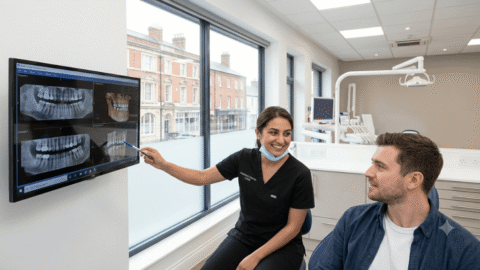
- Initial consultation and assessment. For both Invisalign and Six Month Smiles, the process begins with a clinical examination of your teeth, gums, and bite. Your dentist will take photographs, X-rays where necessary, and a digital or physical impression of your teeth. This is the most important step: the assessment determines whether you are suitable for each system at all, and which version of Invisalign (if applicable) matches your case complexity. Any underlying dental issues, such as cavities or gum concerns, are identified and addressed before treatment begins. Do not skip this step or try to self-diagnose online.
- Digital planning and your preview. With Invisalign, your doctor will quickly and precisely create a detailed 3D scan of your current smile and map out the custom treatment plan for your new one using an iTero scanner. This Clincheck software creates a 3D video of your mouth, which allows patients to watch their whole treatment plan play out before it even starts. Six Month Smiles uses a similar process, though the planning focus is narrower: treatment involves taking an impression of your teeth at the initial appointment, after which customised trays are prepared at the laboratory; these are designed for greater comfort, and your dentist will then position clear brackets for bonding, with ties and wires that match the colour of your teeth.
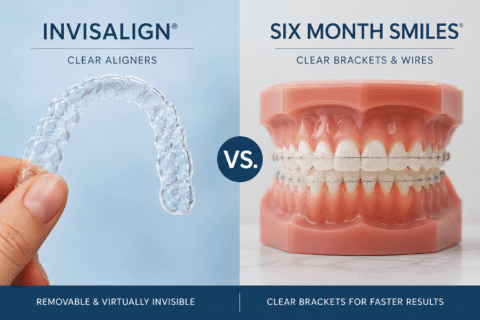
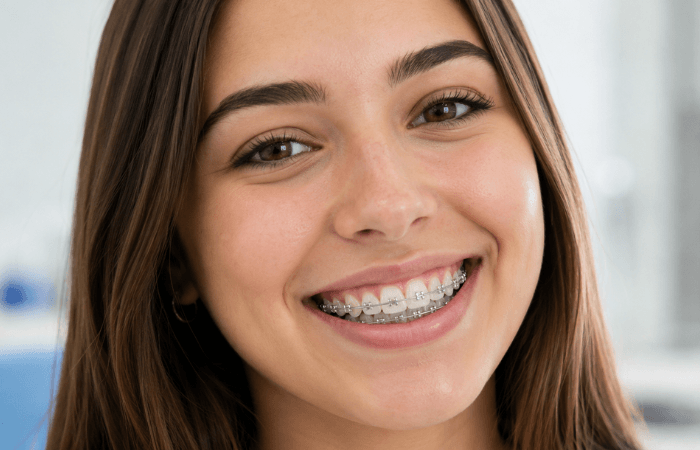
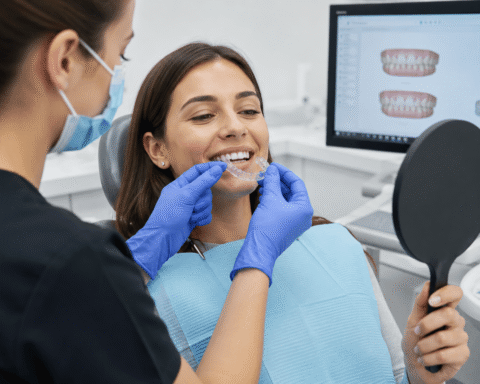
- Fitting day. For Invisalign, when you pick up your first set of clear aligners, your doctor will check them to make sure they fit correctly and are as comfortable as possible. For Six Month Smiles, the clear ceramic brackets and tooth-coloured wires are bonded directly onto the front teeth. The brackets are made from a clear ceramic material and the wires are tooth-coloured; the braces are not removable, and they can only be applied or removed by your dentist. Some patients can have Six Month Smiles brackets fitted on the same day as their initial consultation.
- The active treatment phase. Invisalign works by gradually shifting your teeth into their desired position over time; each set of custom-made aligners is worn for approximately two weeks before being replaced with the next set in the sequence, and this gradual process allows your teeth to move slowly and comfortably. Wearing your aligners for 20 to 22 hours per day and following your dentist’s guidance can significantly optimise the treatment duration. With Six Month Smiles, you will need to revisit your dentist once a month for readjustment. Six Month Smiles visits tend to be quicker than the comprehensive reviews required for Invisalign.
- Check-up appointments. Your Invisalign doctor will schedule a series of regular, face-to-face check-ups to give you each new batch of aligners and monitor the progress of your new smile. Typically you will attend every six to eight weeks. With Six Month Smiles, you will also need to visit your dentist three to seven times throughout treatment for adjustments.
- Completion and retention. When active treatment ends, a retainer is essential for both systems. This is covered in detail later in this article, but the short version is this: without a retainer, your teeth will move back. This applies equally to Invisalign and Six Month Smiles. Wearing retainers is essential to maintain your results and prevent teeth from shifting over time; your dentist will advise how often to wear them, usually at night on a long-term basis.
Treatment Times and What Influences Them
Timeline is one of the factors patients ask about most. The headlines are straightforward enough, but a few nuances are worth understanding before you make a decision based on speed alone.
- Six Month Smiles: Six Month Smiles focuses only on front teeth (the “social six”), uses clear brackets and tooth-coloured wires, and has an average treatment time of four to nine months. The name is memorable but can be misleading. Six months is an average, not a guarantee; some cases finish in two months and some take ten, and statistically your case has a 50 percent chance of taking longer than six months. The reason the system is fast is not because teeth move faster with this particular hardware; the reason it takes six months on average is simply that the cases are simple, and there is no magic technology moving your teeth faster.
- Invisalign: Invisalign treatment typically lasts between six and eighteen months, depending on how complex your case is; minor crowding or spacing may be corrected in as little as four to six months, while more advanced cases may take longer. Invisalign comes in several tiers. Invisalign i7 (sometimes called Express) is designed for very minor movements and often completes within three to six months. Invisalign Lite is designed for less complex cases with crooked teeth, typically requiring six to eight months of aligners. Full Invisalign provides a complete treatment package, usually completed within six to eighteen months, with unlimited aligners during the treatment period.
- Compliance matters more with Invisalign. Because Invisalign aligners are removable, the patient has more responsibility. Factors like the severity of misalignment, your age, adherence to wearing the aligners, and lifestyle habits can influence how quickly results appear; on average, wearing your aligners for 20 to 22 hours per day and following your dentist’s guidance can significantly optimise the treatment duration. Six Month Smiles is fixed, so there is no temptation to leave the brace out. Some patients find that reassuring; others find fixed brackets inconvenient for eating and cleaning.
- Oral hygiene during treatment. Invisalign aligners are removable, so you can take them out when eating, drinking, or brushing your teeth, allowing you to continue your normal oral hygiene routine without difficulty; Six Month Smiles uses fixed brackets and wires, which makes cleaning more challenging, and you must be careful to avoid food getting stuck around the brackets and wires, which can lead to oral hygiene issues.
Indicative Costs in the UK: What to Budget For
Pricing for both treatments varies across the UK and depends heavily on case complexity, the provider’s experience level, and what is included in the package (such as retainers, whitening, or refinements). No fixed prices were available for this practice at the time of writing, so the figures below reflect the typical indicative range seen at UK dental practices in 2024 and 2025.
- Invisalign i7 (minor movements, single arch): From around £1,800 to £2,100, ideal for minor corrections involving either the upper or lower teeth, typically completed within three to six months.
- Invisalign Lite (mild to moderate cases): In the UK, Invisalign Lite ranges from £2,500 to £3,500 on average; for mild to moderate alignment issues it can give effective treatment within a shorter period, around six to twelve months.
- Invisalign Full (moderate to complex cases): Full Invisalign costs range from £3,500 to £4,800 depending on treatment duration and the complexity of the case; it is suitable for moderate alignment problems and provides a full treatment package usually completed within six to eighteen months.
- Invisalign for complex cases: For severe misalignment or complicated orthodontic issues, Invisalign costs in the UK can range from £4,250 to £5,500.
- Six Month Smiles: A Six Month Smiles treatment starts at around £2,500 and can go up to approximately £3,800, with that estimated price covering everything from the start to the end of dental treatment.
- Finance options: Some dental practices offer 0% finance options for treatment, allowing patients to achieve their ideal smile without paying the full amount upfront, spreading the cost conveniently over time through flexible payment plans with monthly instalments tailored to your budget. Always ask your practice what is included in the quoted fee, as retainers, whitening, and refinement aligners are sometimes (but not always) bundled in.
As a broad observation, the more complex the misaligned teeth, the longer treatment will take, which will increase the overall price. Location also plays a role: London and the South East may have higher average prices, while practices in other regions can be more cost-effective. As a Swindon practice, we sit comfortably outside the London premium zone, which can make a meaningful difference to the final figure.
Deeper Comparison: The Questions Most Patients Don’t Think to Ask
Is “Cosmetic Only” a Problem?
This is probably the single most important distinction between the two systems, and it is the one that competitor articles tend to gloss over. Six Month Smiles is a cosmetic treatment. It works on the “social six,” the canine-to-canine teeth that are visible when you smile. Invisalign addresses bite and full arch; Six Month Smiles is cosmetic only, for front-tooth alignment without changing bite.
Why does this matter? If your back teeth have an issue with how they meet, or if your jaw joints are under strain from a misaligned bite, Six Month Smiles will not address that. It may even, in some cases, create a slightly different bite as a side effect of moving only the front teeth. Time and again patients become confused about the pros and cons, and whether correcting only the front teeth is really a sensible alternative to correcting the bite and the way the teeth meet. This is not to say Six Month Smiles is unsuitable for everyone: for patients with a healthy bite and only mild cosmetic crowding or spacing at the front, it can be a clinically reasonable and faster choice. But the decision needs to be made with full information from a GDC-registered professional, not by choosing a system based on cost or speed alone.
Which Is Actually More Discreet?
Both options are far less visible than traditional metal braces, but they are not equally invisible. One of the main benefits of Six Month Smiles is that the clear brackets and tooth-coloured wires are much less noticeable than traditional metal braces; however, they are still visible, especially up close; Invisalign aligners, in comparison, are virtually invisible, and the clear plastic aligners are difficult to see, making them a popular choice for people who are concerned about the appearance of braces during treatment.
If you work in a client-facing role, present on camera regularly, or simply do not want anyone to know you are having orthodontic treatment, Invisalign has a clear advantage here. That said, Six Month Smiles brackets at conversational distance are genuinely subtle, and many patients find them perfectly acceptable in day-to-day life.
What About Comfort?
Six Month Smiles brackets are made of comfortable materials but can rub against the cheek and cause irritation at the beginning of treatment; Invisalign aligners are very comfortable and do not cause that type of irritation. You may feel mild pressure or tightness when switching to a new aligner, but it is usually very manageable and settles within a day or two. Both systems involve some initial adjustment period. Neither should cause significant pain when fitted by a competent provider, though you should always discuss any discomfort at your check-up appointments rather than waiting it out.
Long-Term Stability: The Retainer Question
Whatever treatment you choose, the result will only last if you wear a retainer afterwards. This applies to both Invisalign and Six Month Smiles, and it is worth being clear-eyed about before you start. All patients are at risk of relapse if they do not wear either a night-time retainer or a bonded retainer; teeth will shift back toward their original positions over time if not held in place. Most patients need to wear retainers long-term after Invisalign to maintain results; while full-time wear is temporary, nighttime retention is typically lifelong to prevent gradual shifting, and skipping retainers, even occasionally, increases the risk of relapse over time.
There is an additional consideration specific to Six Month Smiles that is worth raising. Because the system focuses on tipping the front teeth rather than full bodily movement of the whole tooth and root, tipping, which is moving just the visible part of the teeth backward or forward, can be done quickly to make teeth look straighter but has a higher rate of relapse (moving back). This is not unique to Six Month Smiles, but it is a reason to take retainer wear especially seriously if you choose the system. Your dentist should discuss this with you at the treatment planning stage.
Who Is Each Treatment Right For?
Rather than recommending one system wholesale, here is how to think through which suits your situation. A proper consultation is the only way to know for certain.
Invisalign tends to suit patients who have moderate crowding or spacing across several teeth, a bite that needs addressing (overbite, underbite, crossbite, or significant overjet), or a strong preference for something they can remove for eating, sports, or special occasions. Invisalign is a versatile orthodontic treatment that can address a wide range of dental conditions, including crowded teeth, gaps between teeth, overbite, underbite, and crossbite. Patients who are motivated enough to wear aligners consistently for 20 to 22 hours daily tend to get very good results.
Six Month Smiles is a reasonable consideration for patients whose bite is already healthy and functional, who have mild to moderate cosmetic crowding or spacing limited to the front teeth, and who want treatment completed quickly. If you want a fast confidence boost before a big life event, Six Month Smiles may fit well if your bite is otherwise healthy. It can also suit patients who are concerned about keeping track of removable aligners, since the fixed system does not require the same daily discipline.
Some patients are not ideal candidates for Invisalign. The average person interested in orthodontic care will likely be a candidate for Invisalign, but if there is a very severe bite alignment issue or abnormally shaped teeth, Invisalign may be unable to treat the problem and braces are likely a better option. Similarly, Six Month Smiles is not suitable for patients with significant malocclusion, jaw issues, or posterior crossbites.
Why Unassigned Is the Right Choice for Invisalign in Swindon
Our team offers both Invisalign and Six Month Smiles and has no commercial incentive to steer you towards one over the other. Your consultation will focus on what your clinical situation actually requires, with a detailed examination, digital planning where appropriate, and a clear explanation of what each option can and cannot achieve for you specifically. We are accepting new patients and offer flexible payment options to help make treatment accessible.
Frequently Asked Questions
Can Invisalign fix my bite as well as straighten my teeth?
Invisalign addresses a broad range of orthodontic problems, including crowding, spacing, crossbite, overbite, and underbite. The extent to which bite issues can be corrected depends on the severity of the problem and the Invisalign tier used. Mild to moderate bite discrepancies are commonly treated with Invisalign Full or Comprehensive packages. Very severe bite problems or those involving significant jaw discrepancy may require referral to a specialist orthodontist. The only way to know whether your bite is within the scope of Invisalign treatment is to have a proper clinical assessment from a GDC-registered professional.
Will Six Month Smiles affect my bite?
Six Month Smiles braces do not address major bite or malocclusion problems; they are effective in straightening front teeth to achieve a better-looking smile. For most patients whose bite is already stable and functional, this is not a problem. However, for patients who have an existing bite concern, moving only the front teeth without addressing the back teeth can occasionally create a discrepancy. This is why a thorough examination before treatment begins is so important. Your dentist should assess your bite and jaw joints before recommending Six Month Smiles, not simply offer it because it is faster or cheaper.
How visible are Six Month Smiles clear braces in day-to-day life?
Six Month Smiles utilises clear braces along with tooth-coloured wire; unlike traditional orthodontic treatment, they are nearly invisible in the mouth. In practice, they are visible up close, particularly under bright lighting, but they blend in well at normal conversational distance. Photographs and video calls will generally show them more clearly than face-to-face interaction. If you cannot have any visible hardware on your teeth at all, for professional, personal, or social reasons, then Invisalign clear aligners are the more discreet choice.
Do I have to wear a retainer forever after Invisalign or Six Month Smiles?
Retainers are not optional, and both systems require them. Neglecting to follow your prescribed retainer schedule can result in orthodontic relapse; even slight tooth movement can lead to complications such as crowding or misalignment, which may affect your bite. The most common protocol is full-time wear for the first few weeks after treatment concludes, followed by night-time-only wear long-term. The jaw bone stabilises in twelve months, but periodontal ligament memory can last a lifetime. Think of retainer wear as the maintenance phase of treatment, not a temporary inconvenience: it is what protects the time and money you have invested.
Is Invisalign available on the NHS?
Invisalign is a private treatment that is not covered by NHS services. The same applies to Six Month Smiles. Both are elective cosmetic and orthodontic treatments provided privately. If you have a child with a significant orthodontic need, NHS orthodontic treatment may be available subject to an IOTN (Index of Orthodontic Treatment Need) assessment, but this would involve conventional fixed braces rather than clear aligner systems. Adults seeking any form of clear orthodontics will need to do so through a private dental practice.
What happens if I don’t wear my Invisalign aligners for the full 20 to 22 hours a day?
Consistency is the single biggest variable within a patient’s control during Invisalign treatment. The actual timeline can vary based on how your teeth respond to each stage of movement; factors like the severity of misalignment, your age, adherence to wearing the aligners, and even lifestyle habits can influence how quickly results appear. Removing aligners for too long each day means teeth are not receiving the planned pressure, which can slow movement, cause individual aligners to no longer track properly, or require additional refinement aligners to get back on course. This can add time and potentially cost to your treatment. If you are honest with yourself and know you would struggle to wear aligners consistently, a fixed system like Six Month Smiles may serve you better in practice, even if Invisalign is clinically suitable.
Can I have teeth whitening at the same time as orthodontic treatment?
Whitening is generally recommended after orthodontic treatment rather than during it, for a couple of reasons. With Invisalign, the aligners themselves can act as a carrier tray for whitening gel, making post-treatment whitening very convenient. With Six Month Smiles, the brackets cover part of each tooth surface, so whitening during treatment could result in uneven colour once the brackets are removed, since the areas under the brackets would not have been treated. Many Swindon practices bundle whitening with orthodontic treatment packages, so it is worth asking specifically what is included in your quoted fee.
What is Interproximal Reduction (IPR) and will I need it?
IPR is a procedure where a very small amount of enamel is removed from between certain teeth to create space for movement. It is sometimes used as part of an Invisalign treatment plan, particularly in cases of moderate crowding where there is not enough natural space for teeth to move into correct alignment without some enamel slimming. Your dentist may need to use additional techniques like attachments, elastics, or interproximal reduction, which is gentle reshaping of tooth edges to create space. IPR is a routine, established procedure when used appropriately, but it should always be explained to you during treatment planning so you can give informed consent before it is carried out.
What are Invisalign attachments and will I need them?
Attachments (sometimes called “buttons” or “smart bumps”) are small tooth-coloured composite dots bonded temporarily to the surface of certain teeth during Invisalign treatment. They act as handles, giving the aligner tray something to grip against for more complex tooth movements such as rotations or vertical shifts. If you opt for aligner treatment, you may need to get buttons or attachments placed on your teeth; these are temporary, discreet, tooth-coloured fixtures that help secure the aligners better on your teeth for more efficient straightening. Not everyone needs them. Your dentist will only prescribe attachments if the ClinCheck treatment plan requires them for a specific tooth movement. They are removed at the end of treatment and, because they match your tooth colour closely, most patients find them barely noticeable during treatment.
Note: This article is intended as general guidance only and does not constitute professional dental or medical advice. Every patient’s teeth, bite, and clinical situation is different, and outcomes will vary between individuals. Any pricing figures mentioned in this article are indicative ranges based on UK market research at the time of writing and may not reflect the current fees of any particular practice; they are subject to change and may differ from the fee you are quoted following a clinical assessment. You should always consult a qualified, GDC-registered dental professional before deciding on any orthodontic treatment. To find out which option is right for you, book a consultation with our team at Unassigned Dental Practice in Swindon, where we will assess your specific needs and give you honest, personalised advice.