
General Treatment in Swindon
We offer a wide range of treatments

Dental Checkups
All smiles need a little checkup and maintenance from time to time and having a regular checkup will save you from having to carry out any more extensive dental work further down the line.
At each consultation your teeth, gums and mouth will be carefully examined to ensure you are in good oral health and we will also discuss with you any requirements you may have. We can also offer advice on how to protect your teeth going forward as well as how you might improve the look of your smile through a Smile Consultation.

Root Canal Treatment
Root canal treatment (also called endodontics) is needed when the blood or nerve supply of the tooth (known as the pulp) is infected through decay or injury.
If the pulp becomes infected, the infection may spread through the root canal system of the tooth.
Why is root canal treatment needed?
If the pulp becomes infected, the infection may spread through the root canal system of the tooth. This may eventually lead to an abscess.
If root canal treatment (RCT) is not carried out, the infection will spread and the tooth may need to be taken out.
Does it hurt?
No. A local anaesthetic is used and it should feel no different to having an ordinary filling done.
What does it involve?
The aim of the treatment is to remove all infection from the root canal. The root is then cleaned and filled to prevent any further infection.
Root canal treatment is a skilled and time-consuming procedure. Most courses of treatment will involve two or more visits to your dentist.
At the first appointment, the infected pulp is removed. Any abscesses, which may be present, can also be drained at this time. The root canal is then cleaned and shaped ready for the filling. A temporary filling is put in and the tooth is left to settle.
The tooth is checked at a later visit and when all the infection has cleared, the tooth is permanently filled.
What will my tooth look like after treatment?
In the past, a root filled tooth would often darken after treatment. However, with modern techniques this does not usually happen. If there is any discolouration, there are several treatments available to restore the natural appearance.
What if it happens again?
Root canal treatment is usually very successful. However, if the infection comes back the treatment can be repeated.
What if I don’t have the treatment?
The alternative is to have the tooth out. Once the pulp is destroyed, it can’t heal and it is not recommended to leave an infected tooth in the mouth.
Although some people would prefer an extraction, it is usually best to keep as many natural teeth as possible.
Will the tooth be safe after treatment?
Yes. However, it is better to restore the tooth with a crown to provide extra support and strength to the tooth.
Where can this treatment be carried out?
Root canal treatment is a routine dental procedure, which your dentist will be happy to do for you.
What about aftercare?
Root-treated teeth should be treated just the same as any other tooth. Remember to clean your teeth at least once a day, preferably with a fluoride toothpaste. Cut down on sugary snacks, and keep them only to mealtimes if possible. See your dentist for regular check-ups.
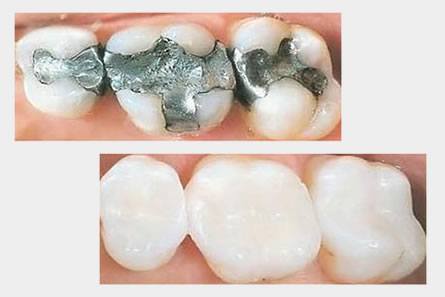
Tooth Coloured Fillings
A filling replaces part of a tooth that has been lost because of decay or accidental damage. All fillings are tooth coloured , carefully selected to match the original shade and shape of the tooth.
A filling will normally be carried out under local anaesthetic. The affected area will be cleared of decay or loose filling, the tooth will be washed and dryed. Then the filling will be inserted and smoothed off before a bright light is applied to set the filling. The filling will then be trimmed off and polished.
Why should I consider white fillings?
Most people have fillings of one sort or another in their mouths. Nowadays fillings are not only functional, but can be natural looking as well. Many people don’t want silver fillings that show when they laugh or smile because they are more conscious about the way they look.
Are they as good as silver amalgam fillings?
White fillings have always been considered less long lasting than silver amalgam fillings. But there are now new materials available with properties comparable to silver amalgam, and these are proving to be very successful. The life expectancy of a white filling can depend greatly on where it is in your mouth and how heavily your teeth come together when you bite. We can advise you on the life expectancy of your fillings.
Is it worth replacing my amalgam fillings with white ones?
It is usually best to change fillings only when we decide that an old filling needs replacing. If so you can ask to have it replaced in a tooth-coloured material.
We sometimes prefer not to put white fillings in back teeth, as they are not always successful. One way around this would be to use crowns or inlays, but this can mean removing more of the tooth and can be more expensive.
What are tooth-coloured fillings made of?
This can vary, but they are mainly made of glass particles, synthetic resin and a setting ingredient.
Are there any alternatives to fillings?
There are alternatives such as crowns and inlays although they can cost a lot more. Veneers can be used on front teeth instead of crowns or fillings.

Dentures
Dentures are worn to replace your natural teeth. They are usually made from lifelike resin teeth bonded to a plastic base.
You will either have been fitted with a complete denture to replace all your teeth, or a partial denture. Partial dentures are usually held in place by clasps or metal clips, which fit around some of your remaining teeth.
Will anyone be able to tell I have dentures?
Not easily. With today’s technology dentures can be made to look so natural that people can’t tell who’s wearing them. Your dentist has custom made your dentures to fit your mouth, so they’ll take on the character of your original teeth, leaving your appearance the same as before. The colour of the teeth is carefully selected, either to match your remaining teeth, or simply to look as natural as possible.
How easy is it to adjust to wearing them?
While your dentures have been custom made, they may initially feel a little strange, or even rather a mouthful, however, rest assured that they only feel that way; you yourself will not look any different. You may also find you produce more saliva than normal but this should settle down soon enough. The time it takes to adjust to wearing new dentures is different for everyone, but you will soon learn how to eat, talk and smile as you would with natural teeth.
Will dentures change how I speak?
Pronouncing certain words may require practice. Reading out loud and repeating difficult words will help. But over time you will adjust and get used to it, so don’t worry! Using a denture fixative will give you extra confidence with speaking.
Do I play a role in how successful my dentures are?
Yes. Learning to eat with artificial teeth requires considerable skill and practice. This is because every person’s mouth has a different structure, which can affect the retention and stability of the denture. Also the level of suction which helps hold the denture in place, particularly the upper denture, will vary dependent upon the amount of saliva produced. Many denture wearers find the lower denture particularly difficult to manage at first.
Experience will help, as will the use of a carefully selected denture fixative, which is a useful aid to assisting with denture retention and stability.
What about eating out?
Once you get used to them, there is absolutely no reason why you should feel too restricted by your dentures. You will, with experience be able to enjoy your meals. At first it is probably a good idea to eat softer food, and to cut your food up into smaller pieces, just until you get used to your dentures. While you learn to use your dentures, it is also a good idea to take smaller mouthfuls and chew slowly; gradually you’ll get better as time goes on. After you put your food into your mouth, try to divide it in two, and then chew each half at the back of each side of your mouth. This even pressure on your dentures will stop them tipping and make them feel more stable.
So what are denture fixatives?
However well fitting your dentist has managed to make your dentures, they can never provide the same, strong biting surface as natural teeth. Using a denture fixative should dispel many of the doubts and fears you may have. Even if you have well fitting dentures a fixative will help in many ways, whether your dentures have just been fitted or you have had them a long time.
How do they work as an adhesive?
Denture fixatives work by reacting with saliva in the mouth to develop adhesive properties. The ingredients then work together to hold the denture in place more firmly and reduce the wobble, so you can enjoy eating apples, crusty bread and other foods that you may otherwise avoid. A fixative can give you more confidence in public and social situations. You will feel better about eating, talking and even playing sports, especially swimming, which puts the suction of complete dentures at risk when water gets into the mouth.
How do fixatives work as a barrier?
A fixative prevents any pips and seeds getting stuck between the dentures and your gums. It expands to fill any gaps and blocks access to these bits of food, so you can enjoy a wider range of foods.
How do fixatives act to increase your bite force?
A fixative will increase your ability and confidence to bite into foods without dislodging your denture.
How does a fixative help prevent gum irritation?
A fixative acts as a supporting layer between your dentures and your gums, to help prevent them rubbing. It also helps reduce the effects of any localised pressure making denture wearing more comfortable.
How do I use a denture fixative?
hClean your denture, preferably by brushing with a denture toothpaste, and dry thoroughly. Apply denture fixative in short ½” strips. Experiment with position and quantity of the fixative for the best results. A good rule is “less is more”! Do not let the fixative ooze out. Small dots may be better. If oozing occurs use a little less. A good tip is to rinse your mouth before inserting your dentures for a quick hold. Press dentures firmly into place for several seconds. Wait several minutes before eating and drinking. The dentures can be removed easily when required. Brush gently with warm water to remove any remaining fixative.
How do I take care of my dentures?
Dentures need cleaning morning and night in the same way as your natural teeth. If you follow this same routine, you can not go far wrong. Pay particular attention to your gums, and any remaining teeth where they meet your dentures as plaque and debris builds up in these areas.
So how should dentures be cleaned?
You should ask your dentist. When cleaning your dentures always remove them from your mouth beforehand to clean them properly. As a general guide remember that dentures are fragile and need to be handled carefully when out of the mouth. Cleaning them with a brush should be done over a basin filled with warm water, so that if you drop them the water will cushion the fall. The main purpose of cleaning is to remove the dental plaque, which builds up on dentures as well as teeth and can harm the gums. Brushing a denture will also remove any food particles stuck to it. The highly polished, easily cleaned new surface of dentures can be damaged by ordinary toothpastes, which can be too abrasive. There are special gentle denture cleaning toothpastes available which, will leave your dentures fresh and minty like a normal toothpaste but will not damage the surface. This brushing helps remove the plaque and debris, whereas soaking alone may not. If you have partial dentures, you should pay particular attention to cleaning your remaining teeth and follow a good oral hygiene routine.
What is soaking?
Some people prefer to soak their dentures in a denture cleaning solution although it has been proven that brushing with a denture cleaning toothpaste is better than soaking alone. It is a personal choice, but if you do soak them, use a known brand tablet or powder with luke warm water. If your dentures have got metal parts, do not soak them for more than 10 minutes, and remember that continued soaking in boiling water can bleach or discolour your dentures. Most soaking brands recommend brushing as well as soaking to ensure debris and plaque are physically removed.
Do I still need to visit my dentist?
Yes. Your dentures are made from materials that are softer than your natural teeth, so they will eventually need replacing. Also your mouth changes shape after your teeth have been removed, and even losing weight can change the shape of your mouth. So to make sure that your dentures continue to fit properly it is important that you visit your dentist at least once a year to have them checked. If you have partial dentures you should visit your dentist every six months.

Wisdom Teeth
Adults can have up to 32 teeth. The wisdom teeth are the last to come through, right at the back. They usually appear when you are between 17 and 25, although sometimes they appear many years later.
Nowadays people often have jaws that are too small for all 32 teeth – 28 is often the most we have room for. So if all the other teeth are present and healthy there may not be enough space for the wisdom teeth to come through properly.
Do they always cause problems?
No. If there is enough room they will usually come through into a useful position and cause no more problems than any other tooth.
Often there will be some slight discomfort as they come through, but this is only temporary and will disappear once the tooth is fully in position.
What is an impacted wisdom tooth?
If there is not enough room, the wisdom tooth may try to come through, but will get stuck against the tooth in front of it. The wisdom tooth will be at an angle, and will be described by the dentist as ‘impacted’.
What problems should I be prepared for?
If part of the wisdom tooth has appeared through the gum and part of it is still covered, the gum may become sore and perhaps swollen. Food particles and bacteria can collect under the gum edge, and it will be difficult to clean the area effectively.
Your dentist will tell you whether this is a temporary problem that can be dealt with by using mouthwashes and special cleaning methods (and possibly antibiotics), or whether it is better to have the tooth removed.
What can I do to help myself?
If your gums are sore and swollen, use a mouthwash of medium hot water with a teaspoonful of salt. (Check that it is not too hot before using it.) Swish the salt water around the tooth, trying to get into the areas your toothbrush cannot reach. An antibacterial mouthwash such as Corsodyl can also reduce the inflammation. Pain-relieving tablets such as paracetamol or aspirin can also be useful in the short term, but see your dentist if the pain continues.
But if it does not help?
If the pain does not go away or if you find it difficult to open your mouth, you should see a dentist. They will be able to see the cause of the problem, and tell you what to do. It may help to clean around the tooth very thoroughly, and the dentist may give you a prescription for an antibiotic.
Are x-rays needed?
The dentist will usually take x-rays to see the position of the root, and to see whether there is room for the tooth to come through into a useful position.
What are the main reasons for taking wisdom teeth out?
- When it is clear that the wisdom teeth will not be able to come through into a useful position because there is not enough room, and they are also causing some pain or discomfort.
- If they have only partly come through and are decayed – such teeth will often be more likely to decay as it will be difficult to clean them as thoroughly as your other teeth.
- If the wisdom tooth is causing a cleaning problem and has no real use.
- If the wisdom tooth starts to ‘over-grow’. This often happens if the lower one has already been removed or is impacted and cannot come through, and the upper one has no tooth to bite against. The upper one will come down too far, looking for a tooth to make contact with.
- If they are painful.
Are wisdom teeth difficult to take out?
It all depends on the position and the shape of the roots. Your dentist will tell you how easy or difficult each tooth will be to remove after looking at the x-rays. Upper wisdom teeth are often easier to remove than lower ones, which are more likely to be impacted. Your dentist will say whether the tooth should be taken out at the dental practice, or whether you should be referred to a specialist (oral surgeon) at a hospital. Very occasionally there is a possibility of some numbness of the lip after the removal of a lower tooth – your dentist will tell you if it is possible in your case.
You will probably have either a local anaesthetic – as you would have for a filling – or sedation. You could also have a general anaesthetic (where you would be asleep), but this will usually be given only in a hospital.
Will it make any difference to my face or mouth?
Taking wisdom teeth out may cause some swelling for a few days. But as soon as the area is healed, there will be no difference to your face or appearance. Your mouth will feel more comfortable and less crowded, especially if the teeth were impacted.
What should I expect after a wisdom tooth is taken out?
The amount of discomfort will depend on how easy it was to take the tooth out. There is usually some swelling and discomfort for a few days afterwards, and it is important to follow any advice you get about mouthwashes and so on, to help with the healing. Some people also find homeopathic remedies help to reduce discomfort. Usual painkillers such as paracetamol, aspirin or ibuprofen will usually deal with any pain. It is best to stay fairly quiet and relaxed for 24 hours afterwards to make sue there are no bleeding problems. There may be some stitches to help the gum heal over. Your dentist will probably want to see you again about a week later to check on the healing, and to remove any stitches.
£65 New Patient Consultation
We are accepting new patients so fill out the form below or call 01793 521646
“Sid the Dentist is the best Dentist I have ever had. I cannot fault the practice in any way, it has a good ambience, knowledgeable and friendly staff, a professional approach to treatment plans and very clear pricing. I would recommend this Dentist to anyone, it simply is fantastic. Top marks!”
Gary M, 5 Star Google Review